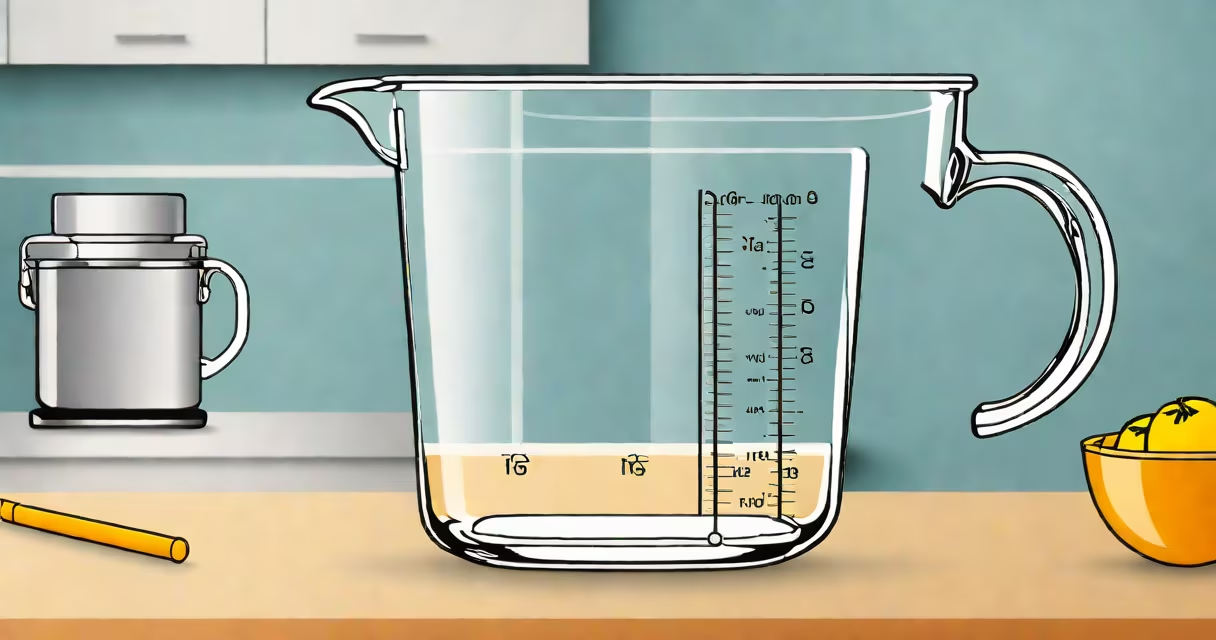
A water measure unit is a standardized quantity used to express the volume of water, such as liters, milliliters, gallons, or fluid ounces. These units enable consistent measurement across scientific, industrial, and household contexts.
Water measure units are derived from established systems of measurement. The metric system uses liters (L) and milliliters (mL), where 1 liter equals 1,000 milliliters. The U.S. customary system relies on gallons, quarts, pints, and fluid ounces. For example, 1 U.S. gallon equals 128 fluid ounces or approximately 3.785 liters.
These units are not interchangeable. A liter is slightly larger than a U.S. quart (0.946 L), and a U.S. gallon is about 20% larger than a British imperial gallon (4.546 L). Misapplying these units leads to errors in cooking, chemistry, and engineering.
Each unit represents a fixed volume. A milliliter measures 1 cubic centimeter of water at 4°C-the temperature at which water reaches maximum density. This physical basis ensures consistency across labs and manufacturing settings.
Units scale linearly. 100 mL is ten times 10 mL. 1 kiloliter (kL) equals 1,000 liters. This scalability allows precise control in processes like irrigation, pharmaceutical production, and beverage bottling.
Conversion between systems requires exact factors. To convert 2 gallons to liters: multiply 2 × 3.785 = 7.57 liters. Using approximate values like "3.8" introduces error-especially in regulated environments like water treatment plants.
Different systems serve different purposes. The table below compares common units by region and application.
| Unit | System | Equivalent in Liters | Common Use |
|---|---|---|---|
| Milliliter (mL) | Metric | 0.001 L | Lab experiments, medicine dosing |
| Liter (L) | Metric | 1 L | Cooking, fuel, beverages |
| Fluid ounce (fl oz) | U.S. Customary | 0.02957 L | Food packaging, recipes |
| Gallon (gal) | U.S. Customary | 3.785 L | Gasoline, milk jugs, water tanks |
| Imperial gallon | British Imperial | 4.546 L | UK fuel pricing, older equipment |
Some units apply only to specific liquids. For example, "barrel" in oil is 42 U.S. gallons, but in water, it's often 100 imperial gallons (454.6 L). Context matters.
Water measure units appear in daily life and specialized fields. In households, measuring cups use milliliters and fluid ounces. A recipe calling for 250 mL of water requires a 1-cup measuring tool-equivalent to 8 fl oz.
In agriculture, irrigation systems rely on cubic meters per hour (m³/h). A sprinkler delivering 5 m³/h runs for 2 hours to deliver 10 m³ of water-enough for 1 hectare of corn under moderate conditions.
Regulatory standards require precision. The U.S. Environmental Protection Agency (EPA) mandates reporting water usage in gallons per minute for industrial discharge. A factory releasing 120 gallons/minute exceeds limits set by the Clean Water Act unless treated.
People often assume all "gallons" are equal. The U.S. gallon (3.785 L) differs from the imperial gallon (4.546 L)-a difference of nearly 20%. Using the wrong conversion causes miscalculations in shipping, fuel, and chemical mixing.
Another misconception: milliliters and grams are interchangeable for water. While 1 mL of pure water weighs 1 gram at 4°C, this changes with temperature and impurities. At 20°C, water density drops to 0.998 g/mL-so 100 mL weighs 99.8 grams, not 100.
Even experts make errors. In 2019, a lab reported a solution concentration using milliliters instead of microliters. The resulting dilution was off by a factor of 1,000-invalidating months of research. Accuracy begins with correct unit selection.
A municipal water plant treats 5 million liters of water daily. Operators monitor flow rates in liters per second (L/s). If the intake pipe delivers 125 L/s, the total volume processed in 24 hours is:
125 L/s × 60 s/min × 60 min/hr × 24 hr = 108,000,000 L/dayThis exceeds the plant's 5 million L capacity. The discrepancy indicates a sensor error or pipeline leak. Correct use of water measure units prevents operational failure.
I once designed a rainwater harvesting system for a community garden. We used 200-liter drums. When calculating how many drums were needed to collect 1,500 liters during a storm, I initially used U.S. gallons. Converting 1,500 L to gallons gave 396.3 gal-but our drums were labeled in liters. Switching to metric avoided confusion and ensured accurate storage planning.
Water measure units quantify volume, not weight. A liter of water weighs about 1 kilogram-but only at 4°C. At room temperature (20°C), it weighs 998 grams. This difference matters in shipping, where freight charges depend on actual mass, not volume.
For example, transporting 10,000 liters of water via truck incurs costs based on weight. At 20°C, the load weighs 9,980 kg-just under 10 metric tons. Using volume-only estimates risks overpaying for transport.
The National Institute of Standards and Technology (NIST) defines the liter as exactly 1 cubic decimeter (dm³) and provides conversion tables for international use. According to NIST's Guide to the SI, the metric system ensures traceability across borders.
The International Bureau of Weights and Measures (BIPM) confirms that the kilogram is now defined by Planck's constant, making mass and volume measurements interdependent. This standardization supports global consistency in water measure units.
Understanding water measure units prevents errors in science, industry, and home use. Whether measuring medication, cooking ingredients, or environmental flows, selecting the correct unit ensures accuracy and safety.