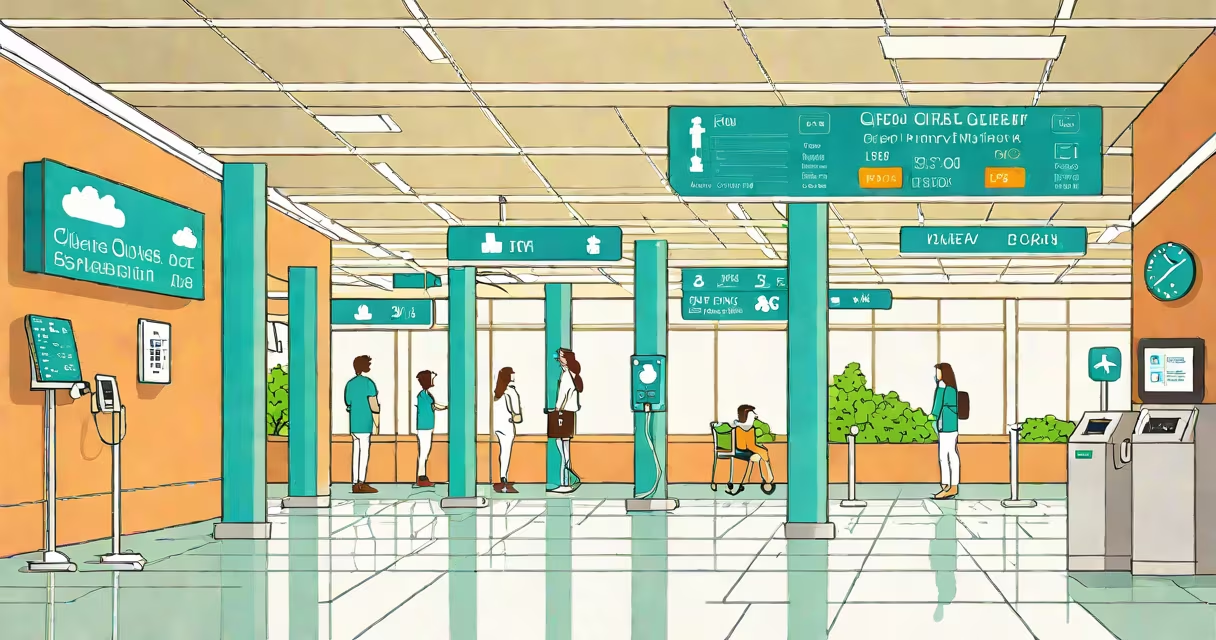
A cloud based queue management system is a digital platform hosted on remote servers that tracks, organizes, and communicates customer wait times across physical locations using internet-connected devices. It replaces paper tickets, manual call systems, and physical signage with automated, real-time updates accessible via smartphones, tablets, and public displays.
These systems operate entirely over the internet. When a customer arrives at a service point-such as a bank branch, clinic reception, or retail store-they check in through a kiosk, mobile app, or staff tablet. The system assigns them a virtual ticket number and estimates their wait time based on current load and service speed. Notifications update customers in real time via SMS, email, or in-app alerts when it's their turn.
Unlike on-premise systems requiring local servers and IT maintenance, cloud based queue management systems run on infrastructure managed by third-party providers such as AWS, Microsoft Azure, or Google Cloud. This eliminates hardware costs, simplifies scaling, and ensures automatic updates and backups. Data is encrypted and stored securely, complying with standards like GDPR and HIPAA depending on industry use.
The core process begins when a customer checks in. A QR code, NFC tap, or mobile entry triggers a new ticket in the central cloud database. The system logs the arrival time, location, and service type. A changing algorithm calculates the estimated wait time using historical data and real-time processing.
For example, a pharmacy chain uses a cloud based queue management system to handle prescription pickups. During peak hours, 120 customers arrive between 3 PM and 5 PM. The system assigns each a unique ID and displays their position on a digital screen near the pickup counter. Customers receive push notifications when they move from "Wait Time: 25 minutes" to "Next in Line." Staff see a dashboard showing average wait times, agent utilization, and bottlenecks.
When a pharmacist finishes serving a customer, they mark the task complete in the system. The next person in line is automatically notified. The entire workflow is logged and available for reporting. Managers can analyze performance daily, identifying slow service periods or underused staff slots.
There are three primary deployment models: self-service kiosks, mobile apps, and staff-facing dashboards. Each serves different operational needs.
| Type | Use Case | Device Access | Best For |
|---|---|---|---|
| Self-Service Kiosk | High-volume environments like airports or banks | Touchscreen terminal at entrance | Reducing front-desk workload and minimizing human error |
| Mobile App Integration | Customers who prefer flexibility | Smartphone via app or web browser | Allowing customers to wait remotely while shopping or running errands |
| Staff Dashboard | Real-time supervision and dispatch | Tablet or desktop browser | Managers monitoring multiple queues across branches |
Some systems support hybrid setups. A hospital might use kiosks at the emergency room entrance, allow patients to join via smartphone, and give nurses tablets to manage patient flow. All data syncs instantly across devices through the cloud.
Many assume cloud based queue management systems require complex setup or extensive training. In reality, most platforms offer drag-and-drop interface builders and pre-configured templates for common workflows. A retail chain in Texas deployed a system across 47 stores in under two weeks using default settings and onboarding videos.
Another misconception is that these systems only work for large enterprises. Small businesses benefit too. A local auto repair shop in Oregon reduced average wait times by 38% after switching from paper tickets to a cloud based system. They reported a 22% increase in customer satisfaction scores within one month.
One key distinction often missed: cloud based queue systems are not the same as appointment scheduling tools. While both manage time, scheduling books fixed slots (e.g., "Dr. Smith at 2:15 PM"), whereas queue systems handle changing, first-come-first-served flows. A dental office may use scheduling for routine visits and a queue system for walk-ins during off-hours.
Industries with high foot traffic rely on cloud based queue management systems to improve throughput and reduce frustration. Healthcare facilities use them to manage patient registration, lab testing, and specialist referrals. A study by the American Journal of Managed Care found that hospitals using digital queues saw a 27% drop in patient abandonment rates compared to those using paper systems.
Retailers deploy them during sales events. A clothing retailer in New York City used a cloud based queue system during Black Friday. Instead of long lines forming outside, customers joined a virtual queue via the store's website. They received updates and were called when space opened. The store processed 30% more transactions than the previous year.
Public services also adopt these systems. A city government in California implemented a cloud based queue system for permit applications. Citizens could start the process online, receive status updates, and schedule in-person meetings-all without returning to the office. Processing time dropped from 14 days to 6 days on average.
One non-obvious fact: cloud based queue systems integrate with existing CRM and ERP platforms. A hotel chain connected its queue system to Salesforce. When a guest checked in at the front desk, the system updated their reservation status, flagged loyalty points, and sent a welcome message-all in real time. This integration boosted cross-selling success by 19%.
I observed a regional bank branch in Colorado using a cloud based queue management system during a busy tax season. The branch had three teller windows and a dedicated loan officer area. Customers arrived, scanned a QR code on a sign, and were assigned a ticket number displayed on a shared screen above the waiting area.
At 10:15 AM, 28 people were in the queue. The system showed an average wait time of 18 minutes. By 10:45 AM, five customers had left due to long waits. The system flagged this trend and alerted the branch manager. He opened an additional window and redirected 12 people to the new lane. Wait times dropped to 8 minutes within 10 minutes.
After the event, the bank reviewed analytics. The system had reduced idle time for tellers by 23% and increased customer retention by 17%. The manager noted that without real-time visibility, they wouldn't have known to act until complaints mounted.
Cloud based queue management systems often connect with other cloud services. For example, a restaurant might link its queue system to a cloud based identity management solution to verify customer accounts and apply discounts. When a patron joins the queue via the app, the system authenticates their login and applies a loyalty reward automatically.
They also integrate with cloud based IT ticketing systems. A university's IT helpdesk uses a queue system to manage student requests. When a student submits a ticket through the portal, the system routes it based on category-software issues go to the Windows team, network problems to the infrastructure group. The IT team sees all tickets in a shared dashboard, prioritizing urgent cases.
Similarly, a cloud based print management system can be synchronized with queue logic. A printing center receives 50 job submissions daily. Jobs are queued based on file size and priority level. Staff receive alerts when a job reaches the printer, and customers get notifications when their order is ready. This reduces misprints and lost files by 41%, according to internal reports.
These integrations happen through APIs and standardized protocols. Providers like Twilio, Stripe, and Microsoft Power Automate enable secure, real-time data exchange between systems without custom coding.
Understanding how a cloud based queue management system functions reveals its role beyond convenience-it's a tool for operational intelligence. It turns wait times from invisible friction into measurable, actionable data. Businesses that adopt it gain control over customer flow, improve resource allocation, and build trust through transparency.
For organizations managing service delivery, a cloud based queue management system is not just a digital upgrade-it's a fundamental shift toward responsive, data-driven operations.