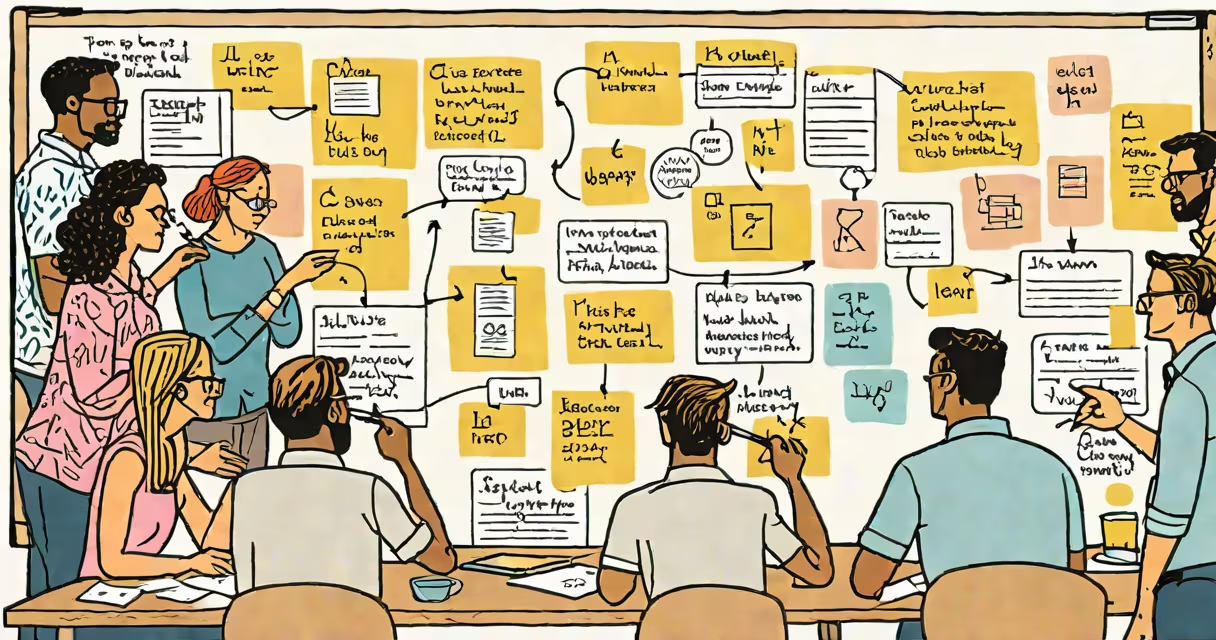
The meaning of agile refers to a project management and software development approach centered on iterative progress, cross-functional teamwork, and rapid adaptation to changing requirements. It prioritizes delivering working solutions quickly over rigid planning and long-term schedules.
Agile emerged in the early 2000s as a response to the limitations of traditional waterfall models, which often failed to accommodate evolving customer needs. The Agile Manifesto-published in 2001 by a group of software developers-defined four core values: individuals and interactions over processes and tools, working software over complete documentation, customer collaboration over contract negotiation, and responding to change over following a plan.
Organizations adopt agile not just in software teams but across marketing, product design, and operations. Its principles enable faster feedback loops, reduced waste, and higher customer satisfaction. For example, a mobile app team using agile might release a new feature every two weeks based on user testing results, rather than waiting 12 months for a full launch.
Agile operates through short cycles called sprints, typically lasting one to four weeks. During each sprint, a team selects a set of tasks from a prioritized backlog-items like "add login via Google" or "fix crash on iOS 16." They complete these tasks collaboratively, then review the results with stakeholders.
Daily stand-up meetings-15-minute check-ins-keep everyone aligned. Team members answer three questions: What did I do yesterday? What will I do today? Are there blockers? These meetings prevent delays and surface issues early.
At the end of each sprint, the team demonstrates the completed work. If users report bugs or suggest improvements, those go into the next sprint's backlog. This cycle repeats until the product meets business goals.
Agile isn't a single method. Several frameworks implement its philosophy. Scrum, Kanban, and SAFe (Scaled Agile Structure) are among the most widely used.
| Structure | Best For | Key Feature |
|---|---|---|
| Scrum | Small to medium teams building complex products | Fixed-length sprints with defined roles: Product Owner, Scrum Master, Development Team |
| Kanban | Continuous workflow, high-volume support | Visual board showing task flow; no fixed iterations |
| SAFe | Large organizations with multiple teams | Aligns hundreds of teams across departments using PI (Program Increment) planning |
Scrum is the most common. A study by VersionOne found that 62% of surveyed teams used Scrum in 2023. Kanban suits teams handling ongoing requests-like IT help desks-where priorities shift daily. SAFe scales agile across enterprise environments, such as banks or healthcare systems managing dozens of interdependent projects.
A key misunderstanding is that agile means "no planning." On the contrary, agile requires disciplined planning-but in short bursts. Teams plan only what they can deliver in the next sprint, adjusting constantly based on feedback.
Software development leads adoption, but agile applies beyond tech. A retail company might use agile to roll out a new checkout system. Marketing teams apply it to test ad campaigns, iterating based on click-through rates. Even HR departments use agile to redesign onboarding programs.
For example, a university's IT department launched a student portal using agile. They released a basic version in six weeks, added features like course registration and grade lookup in subsequent sprints. After each release, students reported issues via a feedback form. The team fixed them within days, reducing complaints by 70% in three months.
According to the Project Management Institute (PMI), agile projects are 2.5 times more likely to succeed than traditional ones. Success factors include transparent communication, frequent stakeholder involvement, and early detection of problems.
Many assume agile is synonymous with "fast" or "chaotic." That's incorrect. Agile emphasizes predictability through regular delivery and clear goals. Speed comes from focus, not randomness.
Another misconception: agile eliminates documentation. In reality, agile values minimal, useful documentation. The Agile Manifesto states "working software over complete documentation," not "no documentation." Teams still create user guides, API specs, and architecture diagrams-but only when needed and kept updated.
There's also confusion between agile and scrum. Scrum is a structure; agile is the philosophy. You can practice agile without using scrum. A startup might hold daily stand-ups and prioritize features based on user input-core agile practices-without formal roles or sprints.
One non-obvious fact: agile doesn't require a team to be co-located. Remote teams using asynchronous tools like Slack, Jira, and Zoom can run agile effectively. GitLab, a fully remote company, uses agile principles across its global workforce. Their engineering team releases updates weekly, guided by sprint planning and retrospectives-all conducted online.
I once led a small team developing a fitness tracker app. We started with a vague idea: "help people stay active." After one sprint, we had a prototype with step counting and daily reminders. We tested it with 12 users. Two quit after three days because the notifications felt intrusive. We adjusted the frequency and added customization options in the next sprint. Within eight weeks, user retention improved from 30% to 65%. The process wasn't perfect, but the ability to pivot quickly made the difference.
Understanding the meaning of agile requires separating it from buzzwords. It's not about adopting a tool or renaming a meeting. It's about embracing change, valuing people, and delivering value early and often.
Agile isn't a one-size-fits-all solution. It demands cultural shifts-trust, transparency, and accountability. Teams must be willing to inspect and adapt regularly. As the Agile Manifesto says: "We are uncovering better ways of developing software by doing it and helping others do it."