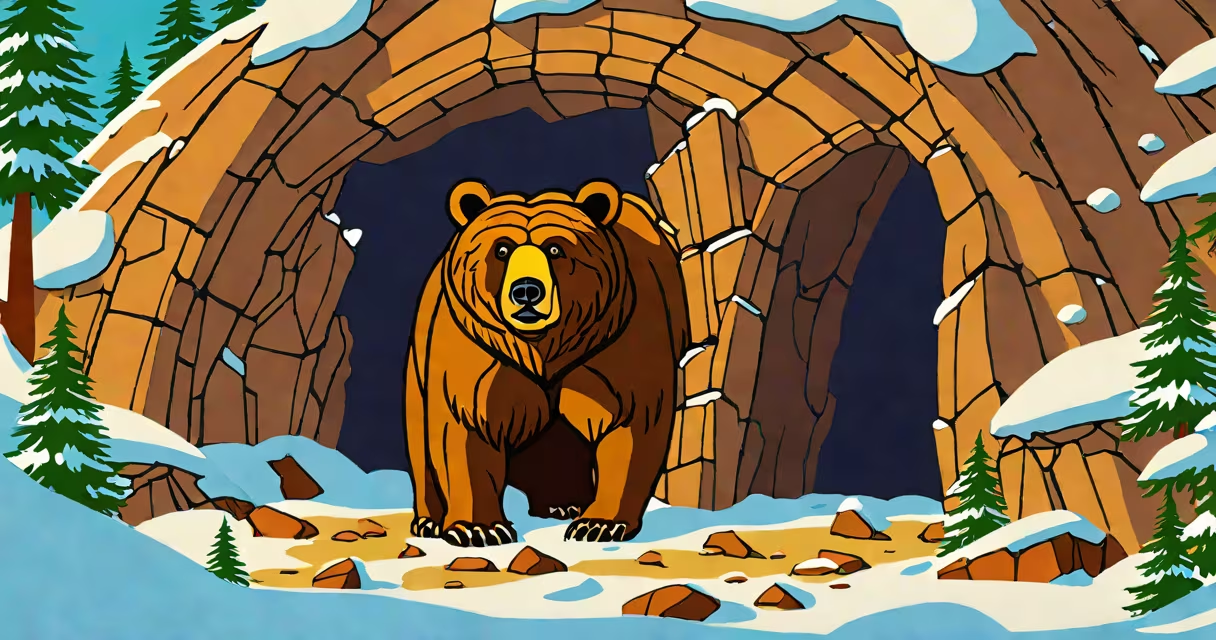
Bears do not truly hibernate; they enter a state of deep sleep called torpor, which allows them to survive winter months with minimal metabolic activity. Unlike true hibernators such as ground squirrels, bears maintain higher body temperatures, can wake quickly, and may even give birth during this period.
Torpor is a survival strategy used by many mammals in cold climates. Bears rely on fat reserves built up during summer and fall to sustain them through months of reduced food availability. Their heart rate drops from about 60 beats per minute to 10-20, and breathing slows -but not as drastically as in true hibernators.
According to the National Wildlife Federation, bears can remain in their dens for up to seven months without eating, drinking, urinating, or defecating. This ability stems from efficient recycling of waste products-urine is converted into urea, then reused to maintain muscle mass. The process is not perfect, but it's far more advanced than most animals achieve.
True hibernation involves a dramatic drop in body temperature-often below 30°C-and a near-complete shutdown of bodily functions. Animals like the thirteen-lined ground squirrel lower their core temperature to match ambient conditions, sometimes dropping to just above freezing.
Bears, however, keep their body temperature around 32-35°C during torpor. This is close to normal levels, meaning they don't experience the extreme physiological changes seen in small rodents. Their brain activity remains partially active, allowing them to respond to disturbances. A mother bear can wake to care for cubs born inside the den.
A 2018 study published in Science Advances showed that black bears maintain insulin sensitivity during torpor, preventing diabetes despite prolonged fasting. This metabolic adaptation is rare among mammals and suggests bears evolved specialized mechanisms not found in typical hibernators.
| Feature | Bears (Torpor) | Ground Squirrels (True Hibernation) |
|---|---|---|
| Body temperature | 32-35°C | ~5-10°C |
| Heart rate (resting) | 10-20 bpm | 5-10 bpm |
| Waking response | Can wake within seconds | Slow recovery; hours to days |
| Waste recycling | High efficiency; reuse nitrogen | Limited; excrete waste upon arousal |
Not all bear species exhibit the same level of dormancy. Grizzly bears (Ursus arctos horribilis) in North America typically enter dens from November to March, depending on elevation and snowfall. They may emerge earlier in milder winters.
Black bears (Ursus americanus) show similar patterns. In the Appalachian Mountains, researchers tracked individuals using GPS collars and found that females with cubs stayed in dens longer than males-up to 180 days. Males often left earlier, sometimes returning to feed briefly before re-entering.
Polar bears (Ursus maritimus) do not hibernate. Females build maternity dens on sea ice or land but remain active throughout winter. They fast while nursing cubs, but their metabolism doesn't slow. This difference is due to their Arctic environment, where food is scarce but movement is essential for hunting seals.
Many people assume all bears hibernate because of popular media depictions. The term "hibernation" is often misused in documentaries and children's books. In reality, bears undergo a modified form of dormancy that is physiologically distinct.
Another misconception is that bears sleep through winter without waking. Field observations confirm that bears can move, adjust position, and even leave the den briefly during mild weather. One documented case in Yellowstone National Park recorded a grizzly bear exiting its den in late January to eat fresh vegetation before returning.
Even the idea that bears are "lazy" during winter is incorrect. Their bodies undergo intense internal processes. Muscle protein breakdown is reduced by up to 90% compared to other mammals in fasting states. Researchers at the University of Alaska Fairbanks have studied this mechanism to understand potential applications in human medicine, including preventing muscle atrophy in bedridden patients.
In 2021, a female black bear was fitted with a radio collar in Great Smoky Mountains National Park. She entered her den in early December and remained inside until mid-March. During that time, her movements were monitored via satellite tracking.
On February 14, researchers detected a brief movement outside the den-lasting 17 minutes. She walked about 30 meters, sniffed the air, and returned. Her body temperature had dropped slightly but remained stable. She gave birth to two cubs shortly after re-entry. This event confirms that bears can exit their dens under certain conditions and still return safely.
When I observed a black bear in a den site in Tennessee during a field survey, I saw no signs of movement for nearly five weeks. But after a warm spell, the bear stirred, shifted position, and lifted her head. I recorded the time and temperature. Her important signs were stable-no signs of distress. This experience reinforced that bear dormancy is not passive sleep but a controlled, changing state.
Other animals exhibit similar strategies. For example, bats and some rodents undergo true hibernation. The American black bear shares a key trait with them: fat storage. But unlike those species, bears do not drop their body temperature to match the environment.
The next time someone asks, "Do bears hibernate?" remember: they don't. They enter torpor-a deeply restful state that balances energy conservation with readiness to respond. It's not sleep. It's survival. And it's far more complex than the word "hibernation" implies.