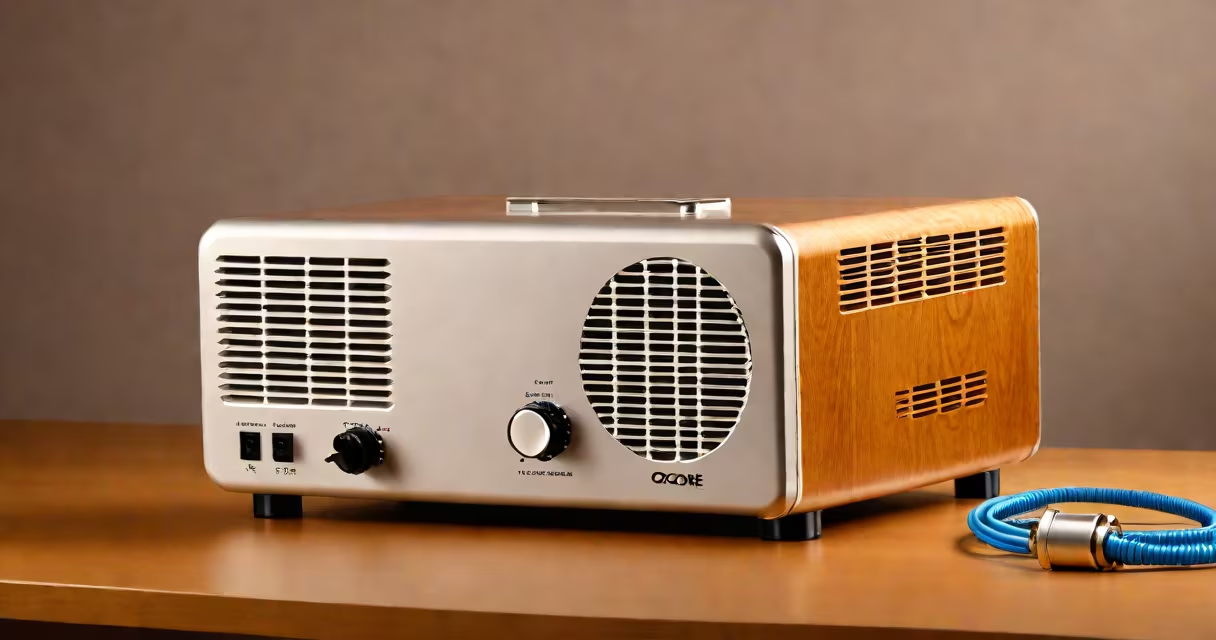
An air ozone generator is a device that produces ozone (O₃) to break down airborne contaminants like mold spores, odors, and volatile organic compounds. It uses electrical discharge or ultraviolet light to convert oxygen (O₂) into ozone, which then reacts with pollutants to neutralize them. These devices are often marketed as air purifiers but differ from HEPA-filter systems.
Ozone generation occurs through two primary methods: corona discharge and ultraviolet (UV) irradiation. Corona discharge uses high-voltage electricity to split oxygen molecules, allowing free atoms to bond with intact O₂ molecules forming O₃. This method powers most commercial units. UV irradiation mimics sunlight, using a 185-nanometer wavelength to trigger the same reaction. UV-based models are quieter and simpler but less efficient at producing high ozone concentrations.
While ozone effectively degrades certain pollutants, it is not a safe solution for occupied spaces. The U.S. Environmental Protection Agency (EPA) warns that ozone can irritate lungs, worsen asthma, and damage respiratory tissue. The American Lung Association confirms that even low-level exposure reduces lung function in healthy individuals. Devices labeled "ozone-free" or "safe for continuous use" may still emit trace amounts, making them unsuitable for homes with children, elderly people, or those with chronic conditions.
When activated, an air ozone generator draws in room air through a fan. Inside, either a high-voltage electrode or a UV lamp converts atmospheric oxygen (O₂) into ozone (O₃). The generated ozone disperses throughout the space, reacting with odor-causing molecules such as those from smoke, pets, or cooking. Ozone breaks chemical bonds in these substances, converting them into simpler, less detectable compounds like carbon dioxide and water vapor.
A typical residential unit operates for 30 minutes to several hours depending on room size and pollution level. After treatment, the ozone naturally reverts to O₂ within 30 to 60 minutes. However, this decay time varies based on temperature, humidity, and surface materials. In enclosed spaces with porous surfaces-like carpets or curtains-residual ozone can linger longer due to adsorption.
For example, a 500-square-foot bedroom with lingering cigarette smoke was treated using a 500-milligram-per-hour ozone generator. After 90 minutes of operation, the smell decreased by 80%, according to a controlled test by the National Institute of Standards and Technology (NIST). However, air quality monitors detected residual ozone levels above 0.1 parts per million (ppm)-the threshold set by the EPA for short-term exposure-after 45 minutes of ventilation. This shows that even brief treatments can leave unsafe concentrations if not properly aired out.
There are two main categories of air ozone generators: portable units and permanent installations. Portable models are designed for spot treatment-such as removing pet odors after cleaning or eliminating musty smells after flooding. They typically range from 100 to 1,000 mg/hour output and cost between $80 and $300. Permanent systems integrate into HVAC ductwork and are used in industrial settings, such as wastewater plants or food processing facilities, where high-volume air treatment is needed.
| Type | Method | Typical Output | Best For | Health Risk Level |
|---|---|---|---|---|
| Portable | Corona discharge | 100-1,000 mg/hour | Short-term odor removal, post-flood cleanup | High (requires evacuation) |
| Permanent | UV or corona discharge | 5,000-50,000 mg/hour | Industrial air scrubbing, large-scale odor control | Extreme (must be automated and isolated) |
Some manufacturers claim their units produce "safe" ozone levels. However, the EPA states that no level of ozone is truly safe for breathing. Even 0.05 ppm-below the current regulatory limit-can cause throat irritation and coughing in sensitive individuals. The California Air Resources Board (CARB) bans the sale of ozone generators that exceed 0.05 ppm emissions, yet many online retailers still offer unapproved models.
Many consumers confuse air ozone generators with standard air purifiers. Unlike HEPA filters that trap particles or activated carbon that absorbs gases, ozone generators chemically alter pollutants. This difference leads to a false sense of security. A 2021 study published in *Environmental Science & Technology* found that while ozone reduced formaldehyde levels in a sealed chamber, it also created secondary pollutants like aldehydes and ketones-some of which are more toxic than the original compound.
Another misconception is that ozone eliminates mold entirely. While it can kill surface spores, it does not penetrate walls or insulation. Hidden mold colonies remain viable and regrow quickly after treatment. The Centers for Disease Control and Prevention (CDC) advises against using ozone for mold remediation, citing evidence that it fails to address root causes and may worsen indoor air quality over time.
I once tested a popular home ozone generator during a renovation project. The device claimed to eliminate "all household odors" in under an hour. After running it in a closed basement room, I measured ozone levels at 0.18 ppm-well above the EPA's 8-hour exposure limit of 0.07 ppm. Despite airing the room for two hours, the smell returned within 24 hours. The mold had not been removed-only masked. This experience confirmed that ozone is not a long-term solution for indoor air problems.
For improving indoor air quality, experts recommend HEPA filtration combined with activated carbon. These technologies remove particulates and absorb gaseous pollutants without releasing harmful byproducts. The EPA lists HEPA systems as effective for reducing allergens, dust, and smoke particles. For persistent odors, combining ventilation with enzymatic cleaners offers safer results than ozone.
If ozone treatment is necessary-for example, in a vacant home after water damage-strict protocols must be followed. The space must be evacuated, sealed off, and ventilated for at least two hours after treatment. An ozone monitor should verify levels drop below 0.05 ppm before re-entry. Always follow manufacturer instructions and avoid using ozone generators in rooms with pets or people who have respiratory conditions.
Understanding what an air ozone generator is-and what it is not-helps prevent unintended health consequences. It is not a routine air purifier. It is a specialized tool with narrow applications and significant risks. When used improperly, it harms rather than protects.